
CORNER OFFICE: KAREN CIVIL, CEO OF LIVE CIVIL
For some, the path to entrepreneurship is an enchanted journey marked by a sudden epiphany that sparks a breakthrough idea. For others, becoming a founder is a formulaic process of spotting the evident void within an industry and developing a smart solution to fill the space. Yet, for many of today’s most disruptive entrepreneurs, the road to launching a company reflects a more unconventional story.
The convergence of media, marketing and technology has redefined the mechanics of building brands in the modern world. As a result, whether developing a digital enterprise or investing in a physical storefront, the most valuable asset any brand can possess is authenticity. Being authentic unlocks a level of connectivity that builds community and elevates a brand from attracting attention to assuming a position of influence.
In a social era shaped by viral trends, the founders that shift paradigms aren’t driven by a desire for validation. Instead, these change-makers are fueled by an innate drive to deliver experiences that change the way people think, live, and understand the world around them.
As the exchange rate on influence eclipses the value of a physical dollar, it’s more important than ever for those at the forefront of changing trends to take ownership of their ideas, influence and unique perspective on the culture.
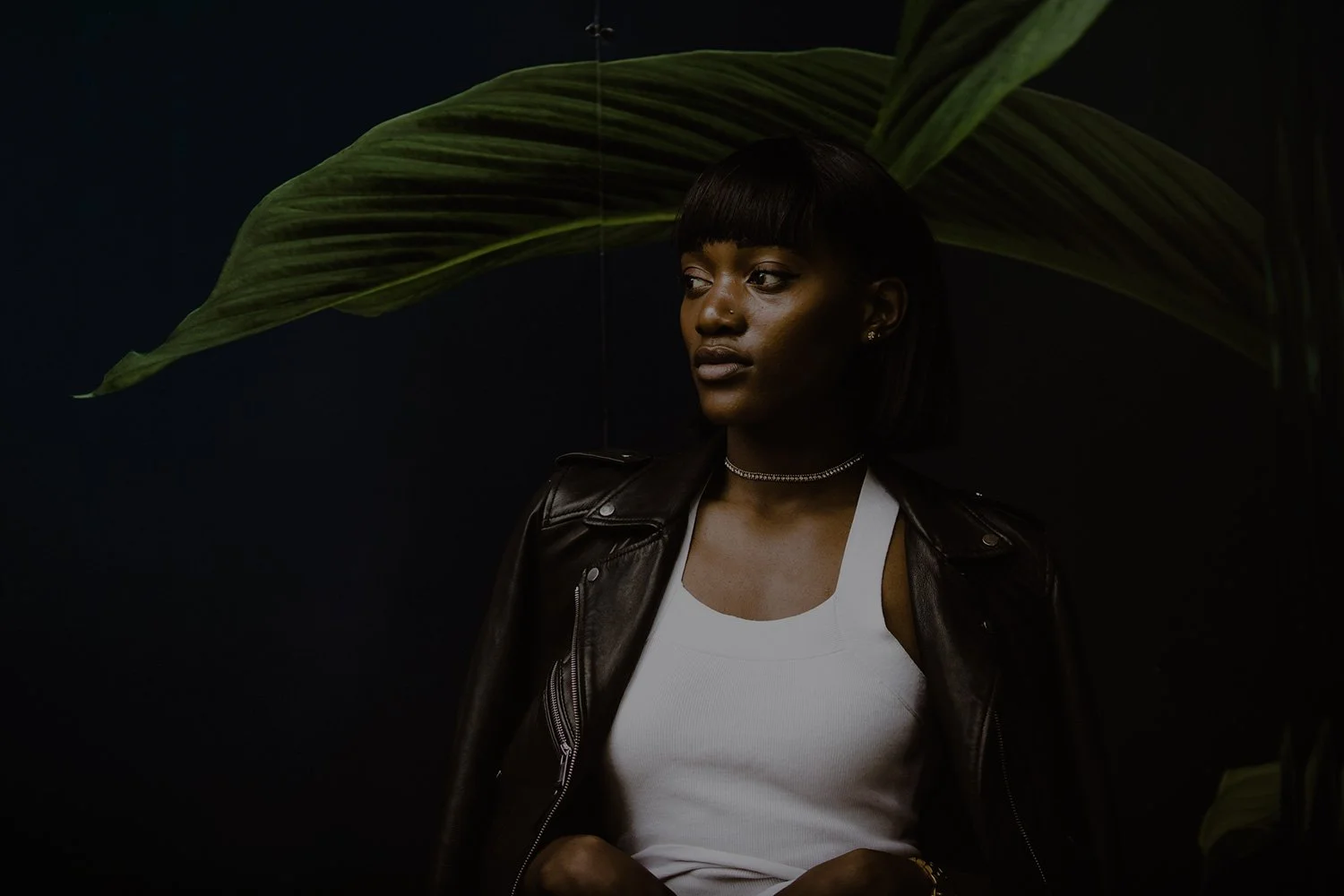
For Karen Civil, translating the relationship between culture and commerce has been the blueprint for building a thriving lifestyle brand, multimedia empire and solidifying her position as a prominent dot connector across industries.
Beginning her career on the brink of the blogging boom, Karen built acclaim by launching a music-driven lifestyle platform that featured exclusive interviews with budding artists and superstars alike. Seeing traffic soar, she quickly established Live Civil Enterprises, a parent company that would house her growing media imprint, brand marketing agency and consulting services. For nearly a decade, she has been a sought-after strategist for an expansive roster of Fortune 500 companies and top-tier celebrities.
Leveraging her social media presence and strong network of artists and influencers, Civil joined Beats by Dre in its early stages as Social Media Director. In this role, she played a pivotal part in elevating the brand’s profile to becoming a relevant staple within pop culture. Following a notable run at Beats, she has helped advance the brands of artists like YG, Jeezy and Nipsey Hussle, while teaming up to launch her own apparel lines and even assist Hillary Clinton in her pursuit of the Presidency.
I spoke with Karen about her inspiring run, lessons learned, and the keys to building a future-proof business rooted in your passions.
You've worn many different hats throughout your career, both as an entrepreneur and collaborating with brands -- How would you describe the work that you do?
Karen Civil: I would describe it as unorthodox marketing, helping brands at every scale come up with out-of-the box ways to tell their story and connect with culture. That includes different levels of marketing – from social media and content, to brand building and strategy. It’s primarily marketing through the lens of brand building, from a social and digital aspect. That’s what I love to do, collaborate with brands and imagine new ways to impact culture or deliver messages that either inspire people or influence the way people think. When I first started out, it was called social media marketing, which evolved into digital marketing, which ultimately means any kind of marketing done online. Now, so much of what I do is centered around building digital brands and creating conversations online that also translate into conversations and experiences offline. My work is focused on turning fans into loyalists, and turning those loyalists into loyal customers or supporters for the brands I work with.
You came into the game at a time where digital marketing and brand building were still fairly new concepts -- How have you seen the landscape evolve and what was the turning point for you?
Karen Civil: The space has definitely evolved since I started my career. Companies weren’t thinking about partnering with an influencer, or working with this individual person to tell their story or shape their strategy. Companies were focused on traditional marketing and sticking to old methods that worked for them. They weren’t really taking risks, trying new platforms or doing any type of unorthodox marketing. A marketing strategy was rooted in doing the typical things, like creating content calendars and posting at a certain time. There wasn’t really any personality, intention or relevance behind it. When I got the opportunity to work with Beats by Dre, it was unconventional for a brand to do at that time. For them to even consider me was different. I didn’t have an agency background or degree in marketing, and I didn't even have to present a resume. They didn't look at all of that. They saw the brand I had built online, and saw that my brand was influencing culture and creating conversation. They also saw my network, and how I was able to engage all of these different people in different spaces. So, what I was able to do for other artists, they wanted me to do that for the brand. To me, Beats was one of the first companies that really leveraged influencers and understood millennials. For a startup company, that was a disruptive way of thinking and it felt like a breath of fresh air. Now, there are so many other brands copying the model, looking to participate in the culture and talk like us. Beats by Dre paved the way.
What made the Beats by Dre experience so meaningful for you and how did it shape your perspective or approach to building your own enterprise in the space?
Karen Civil: Having people like Dr. Dre, Jimmy Iovine, Luke Wood and Omar Johnson -- who are very out-of-the-box in the way that they do business -- set the tone for how the company change the industry. They brought in an influx of care-free marketing people from all walks of life, with their own voice and point of view. It wasn't about saying you come from this certain background, so you have to be like this. They hired us because of our personalities, who we were, and how we each brought something unique to the team. Usually, when you get hired by these companies, they try to change you or force their ideas on you. Beats didn't do that. That helped me see my worth and broaden my perspective of what’s possible. It helped me realize how powerful and influential I was, which honestly shaped my entire thought process. For a long time, I thought Beats was the only brand that would hire me. But, after having so much success with them, all of these other companies started reaching out, because they all saw the brand that Beats was turning into. They saw Beats become an influential global corporation that was built on culture and organic relationships. Beats is the perfect case study of building a brand, understanding your audience, and authentically tapping into the spirit of the culture. I always use this example – when you walk into a cafeteria, there are all of these different tables. There's the cool kids, the nerds, the jocks, and so on. I always said Beats is a part of every table, and Beats made sure to tap into every audience. That's the thing you want to make sure that you do correctly, and that's what Beats was able to do. It’s also great, because before, people didn't think you would be able to have a career like mine. I remember in the 10th grade, my teacher told me that there was no way I can build a career online. Now, I can look back and say yes you can. It’s a career. People are going to college for this. So, it definitely opened doors for creators to be themselves and design the careers they want.
How important is taking full control of your career – Taking ownership or your influence and building your own brand?
Karen Civil: It’s always great to partner with a company, or be a part of something bigger. But, eventually you have to evolve, and I reached that point. I grew up watching Diddy and Jay-Z, who we all idolized for being their own bosses and single-handedly shaping culture. To me, they changed the way black businesses, or black businessmen specifically are perceived. So, when you come from that era of seeing black men have ownership in things, you see what’s really possible. I’m grateful for being able to partner with so many great companies, but I always knew there was another level. In 2018, I had to really tell myself, Karen, you grew up inspired by Dame Dash, Diddy and Jay-Z, who all let you know ownership is key. You know having your own brands and equity in these companies is really what's next. The same way we love other brands, I wanted to love my brand. It only made sense to take the next step. I created a shoe with K-Swiss. I grew up on those shoes. I wore them in high school. If this is a company that understands my brand, understands my vision, and wants to release a signature shoe with me, it’s a perfect fit. For me, 2018 was that year for me truly understanding my brand and where it’s going. I didn’t want to just align with a brand, be the face of it, and tell people to buy it. I want to wake up knowing that I'm wearing my own brands that I love, that genuinely reflect who I am and what I value. Ownership is key, and that's what it’s really about.
In a time of social media and instant celebrity -- How important is appreciating your process and trusting the timing of your life?
Karen Civil: Since we have so much access to things, I think we have become impatient as a generation. We have become clock watchers. Success now has a time limit. You may meet someone and they tell you they’ve been running a business for 30 days and they either want to quit, or expect the highest level of success instantly. I'm like 30 days? Not 30 months or 30 years? People think their return on investment has to be immediate. I can’t follow those rules. I can’t follow those guidelines. I can’t follow where the world is going. I have to just continue being Karen and refuse to set a timer on myself. I can’t put a limit on my success, a limit on my failures, a limit on my business, or accept any type of limit, period. While the world is continuing to go in one direction and you feel like this is the trend, see that as a sign that it’s time to check yourself and make sure you’re moving in your own direction, on your own time.
What have been some of the notable challenges you’ve faced breaking into the game and getting your business to this point?
Karen Civil: I feel like I have two strikes. One, I'm a woman. On top of that, I'm a black woman. I try to look at the glass half full, even though I've walked into plenty of rooms where people wouldn’t shake my hand. They're not looking for me to have an opinion. They’ll look at me as a girlfriend or an assistant before they look at me as a CMO or the CEO. It’s a challenge changing that mind frame, knowing that people will believe you slept your way to the top before you worked your way to the top. It’s unfortunate, but I can’t let other people’s perceptions or stereotypes stop me from getting to where I'm going.
What would you say to people who feel like they need the college degree decorated background or co-sign to achieve their goals?
Karen Civil: Everybody has their own journey. You may feel like you need to have the degree or go to grad school. You may want to gain a certain level of experience, or you may want to work with a company on your bucket list. It’s all about how you’ve programmed your mind to believe what it will take to reach your goals and live your best life. There’s no right or wrong way, and there's nothing wrong with that. That's why they're your dreams. For me, I didn't necessarily want to take the standard approach. I wanted to go all in, have real life lessons, and let that be my way of kicking in the door. Unfortunately, for me at that time, I wasn't going to school. There wasn’t a digital marketing, media or branding degree for me to get. Now, there are so many things you can go to school. If I wanted to have the same career, but was coming up today, I might have a different stance and approach. But, at that time, that wasn't even a realistic option. It’s about your belief system, what works for you and what you think will be best. Life is about betting on yourself and taking chances. If you feel as though you’ve made a mistake, you can always bounce back. I left college because I said to myself, if this internship doesn't work out, I can always come back to school. But, this opportunity to be an intern is not going to be given to me again. So, I took that opportunity and took a chance on myself, and thankfully it worked.
What have been the keys to building your business and being able to continuously expand your brand?
Karen Civil: The keys to my success have been having a great and dynamic team that I can flow things through. It’s about having smart minds you can communicate with who understand your core values, your business values and what works. I don't necessarily need like-minded people around me. I don't want people who think the same about everything. If I'm thinking about Z, I want them to be thinking about B. If I'm thinking about D, I want them to be thinking about F. As much as people like to say they did it alone, that’s rarely true, and I definitely didn’t. Everybody has somebody. There's always somebody that helps guide the ship. I'm all about teamwork, and what I was able to build has been key. Being able to also see them go on and leverage the experience to build their own network and notoriety is success to me. That's really what it’s about.
How important is building real lasting relationships and what have you learned are the keys to developing a strong network?
Karen Civil: To be successful and have longevity in this industry, it comes down to having organic relationships. When I started, I would go to different places all by myself, because usually when you go with somebody, you end up talking to that person the whole night. I would make it a mission of mine to go and meet new people. I wouldn't run towards the talent, or towards the person that everybody wanted to be around. I would gravitate towards people who were hustling just like me. Like Issa Rae said, everybody wants to connect up. I would connect across. I would connect with someone on a similar path, but doing different things. I would discuss how we can build together, and how we can help each other grow. If I left the house with 10 business cards, I set a goal to hand out at least 5. My approach was never how someone can help me, or what can we do right away. It can be two weeks from now, or even a year from now. It’s more about how we can continue the bond and engage in a conversation around helping each other. It’s about following up and following through. I never wanted to put myself in a box and only develop certain types of relationships. That’s why one day you’ll see me with Teyana Taylor, and the next day you see me with Hillary Clinton.
How would you define influence and what characteristics make somebody truly influential?
Karen Civil: To me, an influencer is the person creating the conversation. A person of influence is the one setting the trends, introducing new ideas and engaging people. They may not be someone that people necessarily idolize, but they are leaders who inspire other people of influence. They are the voices that brands turn to when they want to organically and effectively translate their message to a larger market. I hear that word a lot, and people associate me with the term ‘influencer’, but it simply comes down to being someone who inspires action. You must have a mission statement, having a clear understanding of what you want your brand to be and who your brand speaks for.
How do you handle failure and what keeps you motivated in the face of adversity?
Karen Civil: God prepared me to deal with adversity early on in my life, because I took a lot of losses growing up. Dealing with the death of certain friends or people around me, I was able to see that life is not promised. Every day we’re alive and able to live out our purpose is literally a blessing. You can’t take anything for granted. I've been given this opportunity to do what I love and make an impact on the world. That’s not something I take lightly. All I ever told myself is that I want to live a life I believe I deserve, and live it to my fullest potential. The fact that what I prayed for, and what I worked for, I have – nothing is going to stop me from continuing on my path to obtaining success and living it my way. That includes failure. Failure is just a bump in the road. It’s not the final destination. It’s a small hurdle, but we continue on. You're going to continue to have setbacks, but I'd rather have a setback doing something that I love, in a career that I love, rather than at a job I despise. When I have a down moment, I don’t run from it, I embrace it.You're allowed to deal with all of the emotions that come with failure. You may get upset, but then you push forward, learn the lessons and face what’s next. At the end of the day, I love my life too much to let a setback stop me.
How has your definition of success evolved from when you first started to now?
Karen Civil: When I first started, success was a dollar value. It was measured by the amount of money I wanted in my bank account. Then, when I got that money in my bank account, I wasn't happy. In fact, I was at the weakest point in my life. Everyone else looked at me like it was an incredible year for me, and I was winning. But, I wasn’t at all. Mentally, I'm drained. Physically, I'm tired. Personally, I’m unhappy. That's when I had to realize that I stopped chasing my dream and started chasing a check. It was no longer about pursuing my purpose, pursuing my passion, or achieving the ultimate goal. It just became about money. When it started being about money, I had to change everything around. From that moment, life had to be about purpose for me, and I had to go back to that thinking. I had to go back to the mind frame I was in before. That's when I started to feel the changes and started to appreciate the space that I was in. Now, I can say that, over this past year, I've been my happiest. That’s what it’s really about, continuing to every year. Yes, I want to grow my business, but I more so want to continue being my happiest by living in purpose. How have I helped my community? How have I helped the next millennial? How have I helped my family? How have I helped myself? Those are the questions that I ask myself now, instead of focusing on how my bank account is looking. When you're living in your purpose, all of the other stuff will come -- all of the money, opportunity and rewards. You have to know yourself, be yourself and believe in your process.
This can be a description if you’d like that is attached to the video